Table of Contents
There are two kinds of people who watch Dark.
The first person finishes an episode and says:
“What the hell did I just watch?”
The second person finishes an episode and says:
“I understand everything.”
They’re both probably lying.
That’s the fun of Dark.
The German Netflix series starts with a missing child in the small town of Winden. Four families become connected by secrets, relationships and events that stretch across generations. Netflix describes the story as a mystery spanning three generations, but that description barely prepares you for how complicated things eventually become.
Because Dark isn’t just a mystery.
It’s a puzzle.
And at some point, you’re going to stop trying to solve it and just enjoy watching the pieces move.
It Starts Much Simpler Than You’d Expect
The first episode doesn’t immediately throw a thousand timelines at you.
Instead, we get Winden.
A quiet German town.
A group of teenagers.
A missing child.
And a forest that feels like it probably has several horrible secrets.
Then things start getting weird.
Very weird.
The show slowly introduces strange events without explaining everything immediately.
That’s important.
Dark doesn’t treat its audience like they’re stupid.
It doesn’t constantly stop and explain what just happened.
Sometimes you get an answer three episodes later.
Sometimes you get an answer three seasons later.
And sometimes you get another question instead.
That can be frustrating.
But it also makes the show addictive.
The Families Are the Real Story
You might start Dark because you want to know:
“Where did the missing kid go?”
That question won’t stay important for very long.
Soon you’re trying to understand who everyone is related to.
Then you’re trying to remember what year you’re in.
Then you’re wondering why two characters look exactly like someone you saw earlier.
Then you realize they’re connected.
Then you pause the episode.
Then you open Google.
We’ve all been there.
The reason the family connections work so well is that the show makes relationships matter.
These aren’t random characters placed into a complicated timeline.
Their choices affect other people.
Their secrets become someone else’s problem.
Their relationships echo across generations.
And suddenly a small-town mystery becomes something much bigger.
The Time Travel Actually Matters
A lot of shows use time travel because it’s cool.
Dark uses it to make everything worse.
That’s the difference.
Time travel isn’t simply a tool for sending characters into the past so they can change something.
It’s part of the show’s central question:
Can you actually escape your fate?
If you knew exactly what was going to happen tomorrow, would you try to stop it?
And what if your attempt to stop it was actually the reason it happened?
That’s where Dark becomes really interesting.
The show keeps playing with cause and effect.
You think you’ve figured out why something happened.
Then the story shows you another piece.
And suddenly you’re questioning the thing you were so confident about ten minutes ago.
Jonas Is More Complicated Than He Looks
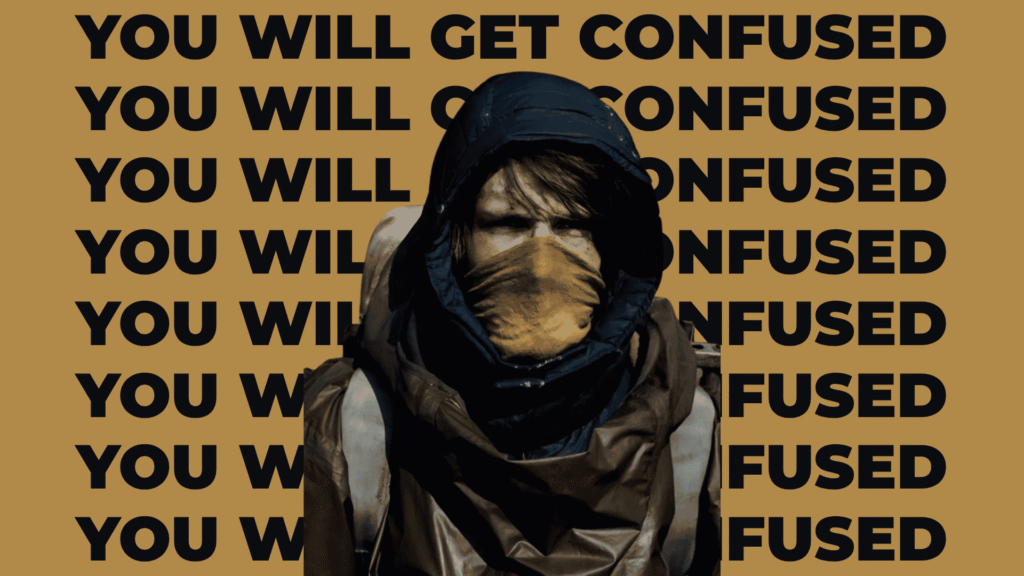
Jonas starts as a teenager dealing with grief and trying to understand what’s happening around him.
That’s enough for a normal mystery series.
Dark obviously wasn’t interested in making things normal.
As the story expands, Jonas becomes one of the main pieces of this enormous puzzle.
But what makes him interesting isn’t simply what happens to him.
It’s how the events change him.
He wants answers.
Then he wants to fix things.
Then he realizes that fixing one thing can destroy another.
And eventually, the question becomes less about what Jonas wants and more about whether anyone in this story actually has control over their own life.
That’s a much darker question.
And the show never gives you an easy answer.
Winden Might Be the Most Important Character
This sounds strange, but Winden almost feels alive.
The caves.
The forest.
The power plant.
The houses.
The rain.
Even the constant grey skies.
Everything feels connected.
The town doesn’t feel like a generic location where the story happens.
It feels like part of the mystery.
And that atmosphere is a huge reason Dark works.
You can almost feel something bad coming even when nothing is happening.
A normal conversation in a normal room can feel suspicious.
Someone walking through the forest can feel like a major event.
The show understands that mystery isn’t only about what happens.
Sometimes it’s about how a place makes you feel.
Yes, It Gets Confusing
Let’s not pretend otherwise.
Dark gets confusing.
At times, very confusing.
You’ll meet a character and wonder:
“Wait, who is that?”
Then you’ll discover who their parents are.
Then you’ll realize their parents are connected to another family.
Then you’ll discover something about the timeline.
And suddenly you’re staring at a family tree that looks like someone threw spaghetti at a wall.
But here’s the thing.
The confusion isn’t necessarily a flaw.
The show is asking you to pay attention.
Names matter.
Dates matter.
Small details matter.
A conversation from an earlier season might suddenly become important much later.
So if you watch Dark while scrolling through Instagram, you’re probably going to have a bad time.
Put the phone down.
Pay attention.
You’ll thank yourself later.
The Best Part Is That It Actually Has an Ending
This is something I really appreciate about Dark.
The story has a beginning.
It gets increasingly complicated.
And eventually, it reaches an actual conclusion.
Netflix lists Season 3 as the third and final season, with the story moving beyond the concept of space and time and bringing the show’s central mystery toward its conclusion.
That matters.
A complicated mystery is only satisfying if the writers know where they’re going.
Dark gives you answers.
Not always the answers you expect.
Not always the answers you want.
But answers.
And when you look back at the beginning after finishing the entire series, some of the things that seemed random suddenly make much more sense.
That’s a satisfying feeling.
Is Dark Worth Watching?
Yes.
But I wouldn’t recommend it to someone who wants something they can casually watch while eating dinner and checking their phone.
This is a show that demands attention.
If you like:
- Mystery
- Science fiction
- Time travel
- Family drama
- Complicated stories
- Shows that make you think
then Dark is absolutely worth your time.
And if you hate complicated plots?
You might still enjoy it.
Just keep a family tree nearby.
Seriously.
Final Verdict
Dark – 9.5/10
It’s confusing.
It’s slow in places.
It requires attention.
And occasionally you’ll wonder if the writers are deliberately trying to destroy your brain.
But that’s also why it works.
Dark trusts you to keep watching.
It doesn’t spoon-feed every answer.
It builds a mystery, adds another mystery, connects the two, and then somehow introduces an even bigger mystery.
And somehow…
it all comes together.
That’s the impressive part.
Not that Dark is complicated.
Lots of shows can be complicated.
It’s that the complexity actually means something.
Underneath all the timelines, paradoxes and family trees, Dark is ultimately about people trying to change things they may never have been able to control.
And maybe that’s why the show sticks with you.
You start watching because a child disappears.
You keep watching because you want answers.
And by the end, you’re thinking about something much bigger:
How much of our lives is actually our choice?